Jul 22, 2026
88 keys, four revolutions: Herbie Hancock in August
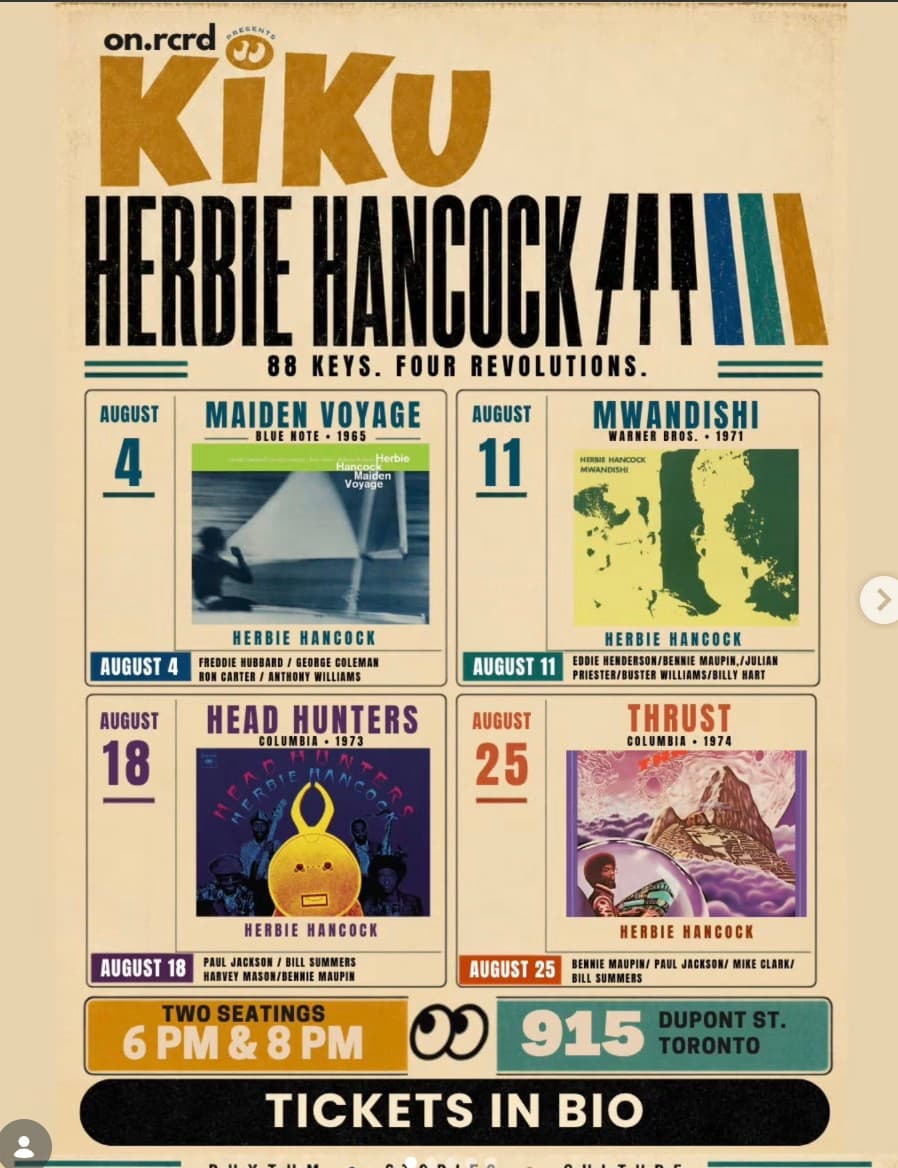
Four Tuesdays, one artist, two seatings a night at 6pm and 8pm. The artist is Herbie Hancock, and honestly, this one's personal.
Four Tuesdays, one mind across decades.
Maiden Voyage (Blue Note, 1965), recorded in one session with Freddie Hubbard, George Coleman, Ron Carter and Tony Williams. Herbie was 24. It barely raises its voice and still feels bottomless.
Mwandishi (Warner Bros., 1971), where he took a Swahili name and built a sextet with Eddie Henderson, Julian Priester, Bennie Maupin, Buster Williams and Billy Hart. Fully electric, half improvised, one of the strangest and most fearless records he ever made.
Head Hunters (Columbia, 1973). He broke that band up and started over with Paul Jackson, Bill Summers and Harvey Mason, leaner and funkier. It became one of the best selling jazz records of all time and rewired what jazz was allowed to groove like.
Thrust (Columbia, 1974), same crew minus Mason, Mike Clark stepped onto drums. Tighter and stranger, built around a rhythm section playing patterns most bands couldn't touch. It closes the arc exactly where it should.
There were so many records to choose from, a whole life's worth. But these four kept pulling me back, not just for what they meant to him but for what they did to the sound itself.
This is one of those months where I'd actually encourage you to come more than once. There's something different about hearing the shift happen week to week, watching one mind move from Maiden Voyage all the way to Thrust. That's the real study, going on the journey with him rather than just hearing one stop on it.