Jul 12, 2026
Miles Davis was critical of him. Hank Mobley didn't need him to be right.
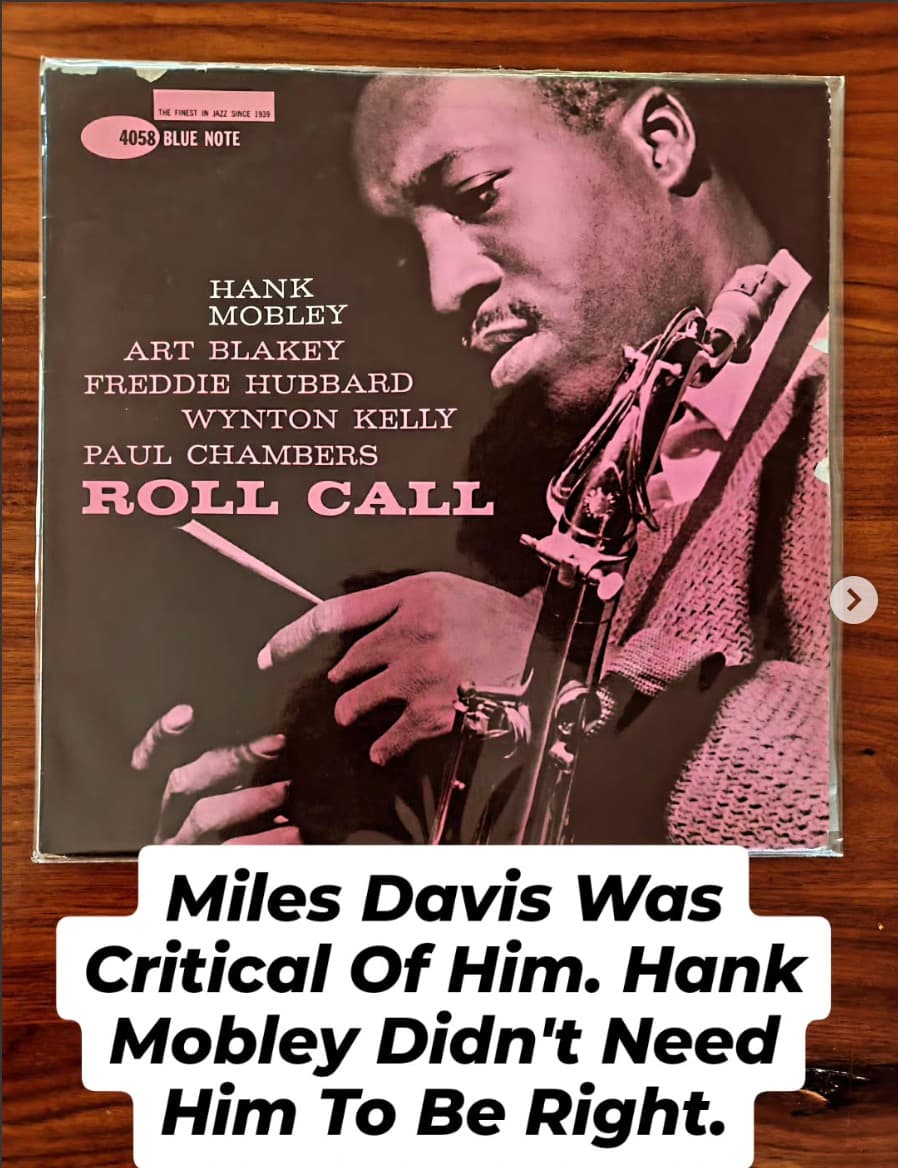
What happens when you're hired to replace John Coltrane in Miles Davis's quintet? In 1961 that question landed on Hank Mobley, and it should have been the biggest opportunity of his career. Instead Davis wrote years later that playing with Mobley wasn't fun for him, that Mobley didn't stimulate his imagination. Mobley was gone from the band within six months.
He walked into that gig right off the back of Roll Call, recorded November 13, 1960, in the middle of a run with Soul Station and Workout that proved his comeback from a year lost to a drug arrest was real.
He brought back the exact rhythm section from Soul Station, Wynton Kelly on piano, Paul Chambers on bass, Art Blakey on drums, and added a young Freddie Hubbard on trumpet. Six tracks, all but one written by Mobley himself, the title cut carrying that unmistakable Blakey drive, A Baptist Beat leaning hard into gospel phrasing, The More I See You giving his tone room to do what people meant when they called his sound round rather than sharp.
None of it happened by accident. Mobley rehearsed his bands twice a week leading into a Saturday session, with Blue Note actually paying the musicians for that time. Alfred Lion sat in himself, shaping tempo, pushing for another take until he heard what he wanted.
Critics who've gone back to those Davis recordings don't hear what Davis heard, many say Mobley and Kelly are the real highlights of the Blackhawk sessions.
Davis's private verdict and the actual tape don't agree, and Mobley never got the satisfaction of him changing his mind. He didn't need it. Roll Call stands on its own, proof that the comeback was real regardless of what one bandleader thought of him in a club in San Francisco.