Aug 18, 2026
Jazz purists called it a sellout. It became the first jazz record to sell a million copies.
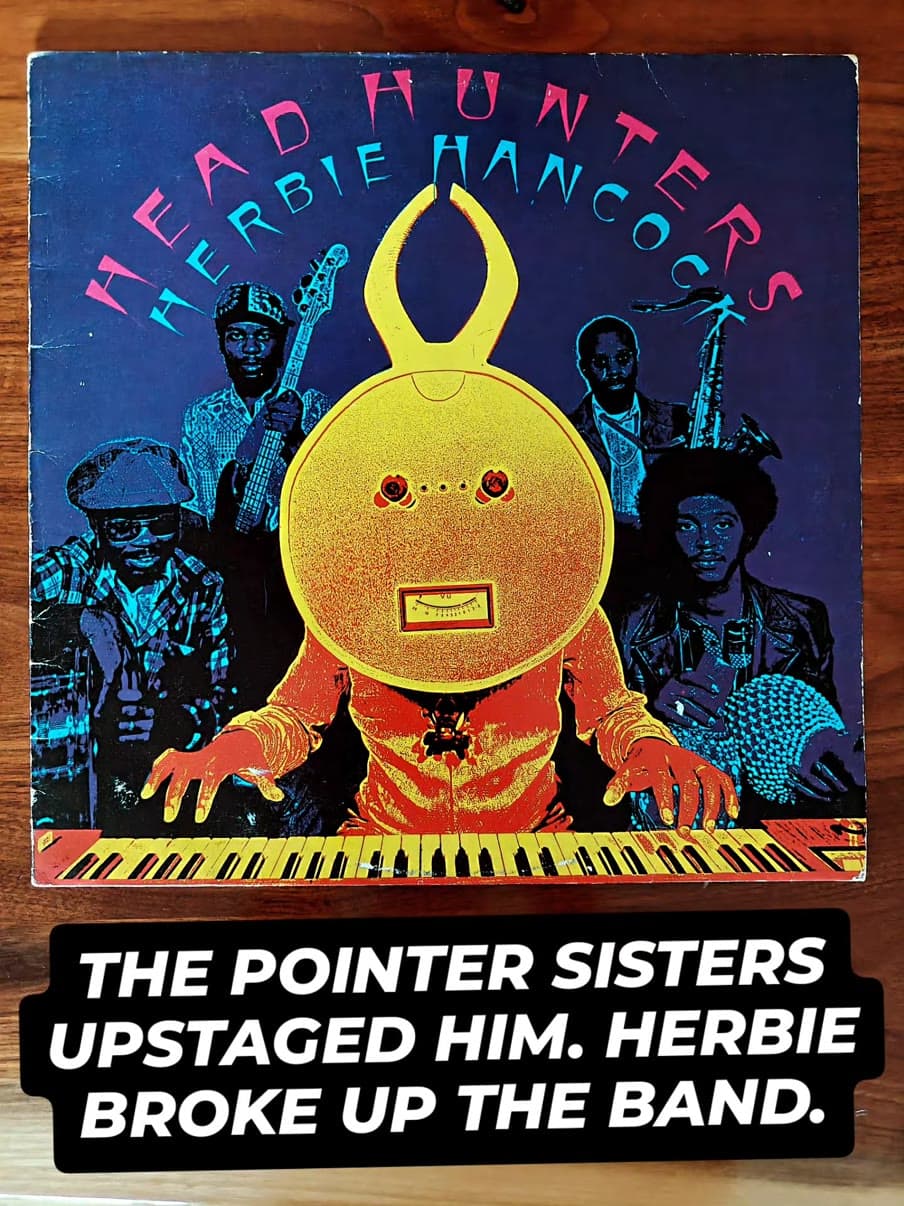
Tonight at 915 Dupont we dig into Head Hunters as part of the Kiku series.
Picture the Troubadour in West Hollywood, summer 1973. Herbie Hancock is headlining a week of shows with the Mwandishi band, one of the most adventurous groups in jazz.
The opening act is a new group from San Francisco called the Pointer Sisters, on the bill mostly because the same man managed both of them.
The Pointers get the room on its feet from the first notes and leave it standing, wanting more.
Then Mwandishi plays. People are baffled. Some of them walk out. Down Beat reviewed the run that summer and the walkouts made the write up.
I played that same room in 2013, back when I was signed to Capitol. Knowing Herbie had one of the hardest nights of his career in there makes it land differently now.
This is the third week I've spent with Herbie, from Maiden Voyage to Mwandishi to this, and what keeps hitting me is how little "ego" is in the way. (Technically it's super ego but I digress.)
He had accomplished more by 1973 than most musicians manage in a lifetime.
He watches his opening act connect with a room in a way his band couldn't, and instead of dismissing them he says his music wasn't functional. Not dinner music. Not party music. Not music you could hold a conversation over. He says he's grown tired of everything being so heavy.
Then it gets more uncomfortable.
Chanting at home, he pictures himself sitting in with Sly Stone's band playing something deeply funky, and he loves it. Then the picture flips. His own band playing that music, Sly sitting in with him. That version makes him flinch, and he recognizes the flinch straight away. It's the same snobbery he'd always hated in other jazz musicians, the ones who put jazz on a shelf above funk and rock.
He had it too.
So he breaks up the band, keeps only Bennie Maupin, and makes this.
I love when musicians that successful can still look inward and ask what they're missing.
Jazz purists called it a sellout. It became the first jazz record to sell a million copies. Tonight we play the whole thing.