Jul 10, 2026
Too funky for jazz radio, too jazzy for R&B radio, so nobody played it
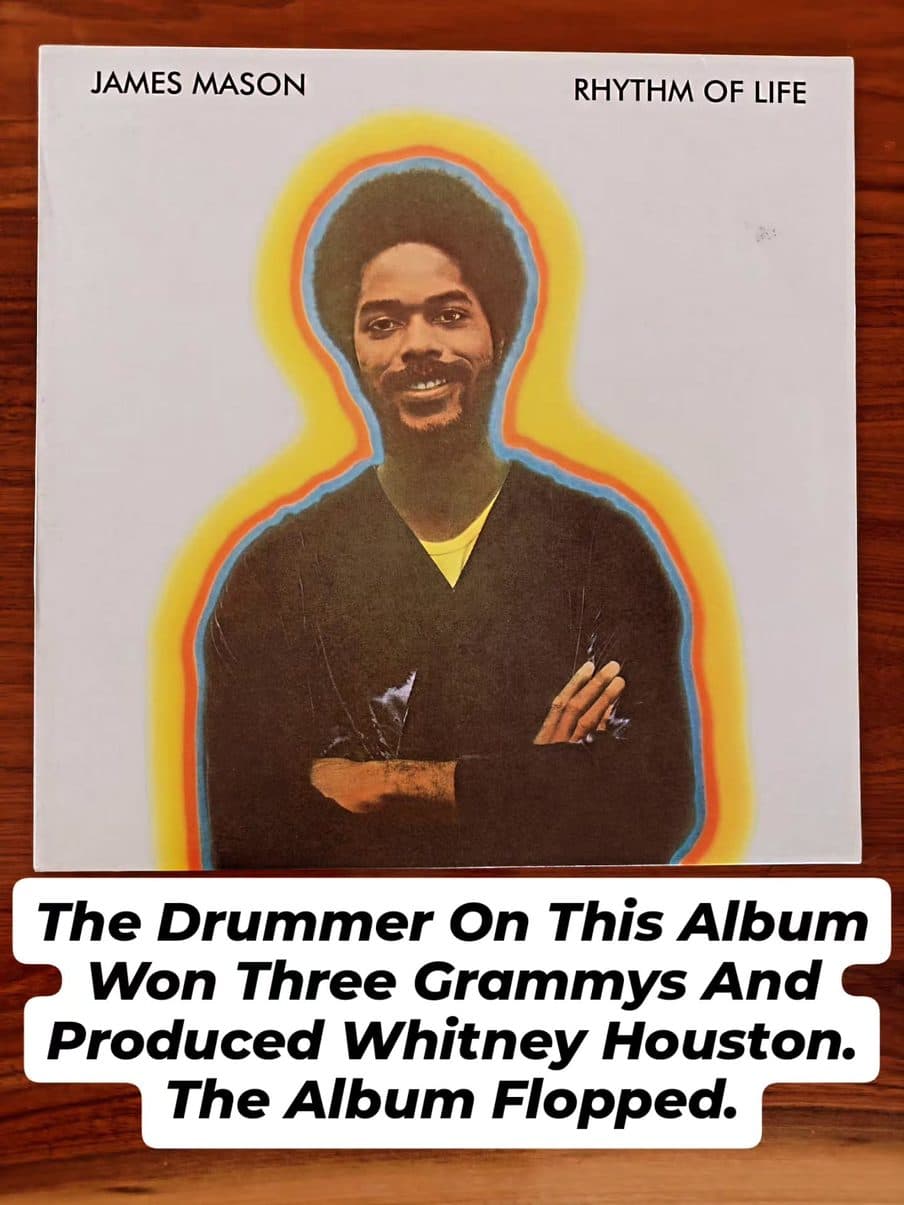
“I guess the business didn't want me.”
That's how James Mason described what happened after Rhythm of Life came out in 1977. Considered a grail amongst us collectors.
The jazz stations wouldn't play it because it was too funky, the R&B stations wouldn't play it because it was too jazzy, and there was no home for it anywhere in between.
Mason has said he simply didn't have the track record or the industry standing to get himself a second deal after that, no hit, no momentum, nothing to point to that would make a label take another chance on him.
So there wasn't one.
He came of age in the Bronx in the early 70s, shaped by a mix of Black American, Latinx, and post-60s cultural influences all colliding in the same neighbourhood, and it shows in everything he made.
By the late 70s he was Roy Ayers' guitarist, playing on Lifeline and its biggest cut, Running Away. In 1977, while still in that band, he stepped out to make this record on a tiny New York jazz label called Chiaroscuro. Sitting behind the drum kit was a mid-20s session player named Narada Michael Walden.
Mason mostly disappeared after that, doing session work in Japan with fusion musicians before the recordings quietly stopped.
Walden did not disappear. Within a decade he was producing six of Whitney Houston's seven number one hits, Aretha Franklin's Freeway of Love, and Mariah Carey's Vision of Love, picking up three Grammys along the way, including Producer of the Year.
The same guy laying down the drums on a record nobody wanted went on to define the sound of American pop radio.
Today collectors chase original copies of Rhythm of Life hard, and it's considered one of the essential records of the whole jazz-funk era.
It took the acid jazz scene in the UK over a decade to hear what the industry couldn't place in 1977.