Aug 4, 2026
Fired for his locks, he paid for the studio session himself
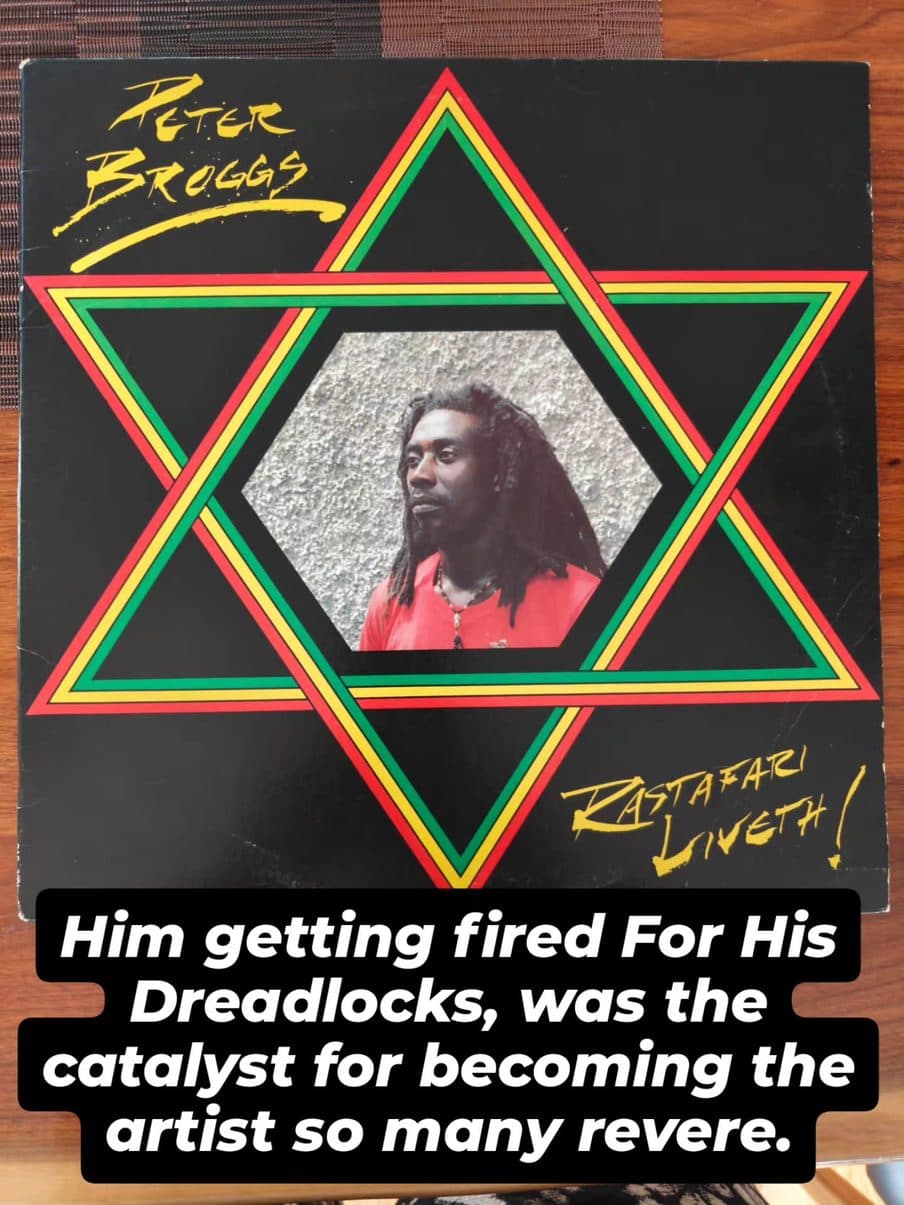
I keep coming back to the fact that Peter Broggs never actually set out to be a singer.
He left Hanover Parish for Kingston at seventeen because he needed work, and he found it in a factory. Then he embraced Rastafari, let his locks grow in, and they fired him for it. That was the whole reason his life changed direction.
What he did next is the part that stays with me.
He walked into Channel One, paid for the session out of his own pocket, cut a single with the Roots Radics behind him, then sold the copies himself, by hand, on the street.
Did it again months later with another one. No deal, no manager, no producer looking out for him, just a man who'd lost his job for what he believed and figured music was the only thing left to try.
He'd grown up on Otis Redding, not reggae, which I love. In Kingston he landed around Gregory Isaacs, Bingy Bunny, Errol Holt, and Bingy Bunny produced his debut in 1979.
Meanwhile, and this is where it gets strange, there's a guy in Washington DC named Gary Himelfarb selling fish with his brother.
He'd first heard reggae in 1972, flown to South America alone straight out of high school, then spent three months in 1977 walking across Jamaica to be inside the culture.
He came home, got a radio show, started calling himself Doctor Dread, and drove to Brooklyn to buy reggae records and resell them around DC out of his car. He named the label RAS, head in Amharic, because he'd already decided it would be the biggest reggae label in the world.
He heard Broggs's debut and went looking for him in Jamaica.
They cut this at Channel One in February 1982, Roots Radics playing, Scientist mixing some of it. Dread produced it and took the cover photo himself, which is why a Jewish kid from Washington is the one who framed a Rastafarian singer inside that Star of David.
It became the first record RAS ever released, and RAS went on to become one of the biggest reggae labels on earth. Broggs had a stroke in 2004 that left him paralyzed and barely able to speak. He died in 2015.